

Jenifer’s Journal: Christmas Past
A lovely thing about Christmas is that it’s compulsory, like a thunderstorm, and we all go through it together. — Garrison Keillor
You may be one of those people for whom the only good Christmas is, indeed, “Christmas passed,” one that’s come and gone. Maybe, as far as you’re concerned, the sooner the holidays are over, the better. You’re not alone, especially amidst the chaos and confusion of COVID.
Lots of us may be contemplating the coming holiday season, including Thanksgiving, Christmas, Chanukah, Kwanza and New Year’s, with a jaundiced eye and an expectation of total exhaustion when we finally make it (if we ever do) to the end of the glittering gauntlet of festivities.
Speaking of expectations, Kendra Cherry, on verywellmind.com, lists “unrealistic” ones among these several causes for holiday depression:
Lack of sleep A hectic holiday schedule can lead to a lack of sleep, which increases stress.
Financial stress Overextending yourself financially or struggling to afford gifts for family and friends can create an added burden of financial stress.
Isolation and loneliness Not being able to spend the holidays with your family and friends can make the holiday season seem especially lonely.
Excess eating and alcohol use Unfortunately, people sometimes turn to unhealthy coping mechanisms to handle holiday sadness and stress. Excessive drinking and overeating can make the symptoms of holiday depression even more pronounced.
Unrealistic expectations Sometimes even having high hopes for the season can lead to holiday stress and sadness. The over-commercialization of the holidays can create the expectation that people are supposed to feel nonstop joy and holiday cheer, which can create pressure to feel a very specific way, adding yet another stressor to an already hectic time of year.
Because the holidays mark an impending new year, people may also begin to reflect on the past year and experience feelings of regret or failure. They might think about the goals they had and the things they wanted to accomplish and feel upset if they did not meet those expectations.
It isn’t just adults who are prone to seasonal sadness. Changes in routines, dealing with family problems, missing friends, and feeling stressed around the holidays can all contribute to feelings of sadness and depression in kids.
Unquestionably, the holidays are an emotionally loaded time. They certainly were for me from earliest childhood. I have a wonderful family, but as with many families, a complicated one, marred through the generations by pockets of alcohol and substance abuse.
When I was little, both of my parents worked and we had a nanny who only had time and attention enough for my baby brother, leaving my older brother and me pretty much on our own.
Also, there seemed to be a jagged edge of discord running through my parents’ relationship which, at five or six, I was only able to feel, not understand. Most of the time, I was a shy, anxious kid, until December, that is.
I guess because my birthday (recently belabored here) comes right at the beginning of the month, I assumed that it was the trigger that somehow released the glistening gush of Christmas magic that would fill up the next few weeks.
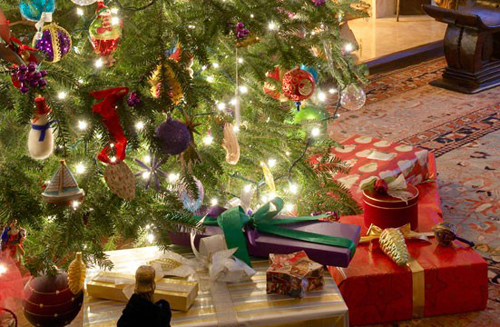
From the angel night-light with the silvery long hair that appeared in my bedroom on December 1, to the homemade “snow” and the snowflakes we stenciled on the windows, to the pomp and solemnity of choosing the tree, to lying on the rug looking up through the tinseled branches at constellations of glowing colored lights, to the carols, Scrooge and the ghosts, the shepherds, the star and the three wise men, and so much more — all magic.
The most magical of all was what seemed to happen to my family. Tension turned into anticipation, sadness into laughter and, around every corner, the glimmering possibility for happy endings.
It was “a wonderful life” until, after the gorgeous chaos of Christmas morning, we had to bring our treasures upstairs and get ready to go to our uncle’s where, for the next few hours, we had to sit with people we barely knew, opening a present or two of socks, or a scarf, knowing that the death knell was sounding for the end of Christmas, which would not come again for another, impossibly long year.
Seriously, to my lonely child self, it didn’t seem survivable.
Years later, I became a parent and had a chance to make Christmas magic for my children, moved more by compulsion than the Christmas spirit. I far exceeded my single-parent means in doing so.
Nowadays, I let others buy the ceiling-scraping trees and too many presents, and I leave them to decorate every available surface in their homes. I confine myself to spoiling my grandchildren.
But the Christmas Past magic? A little goes a long way.